


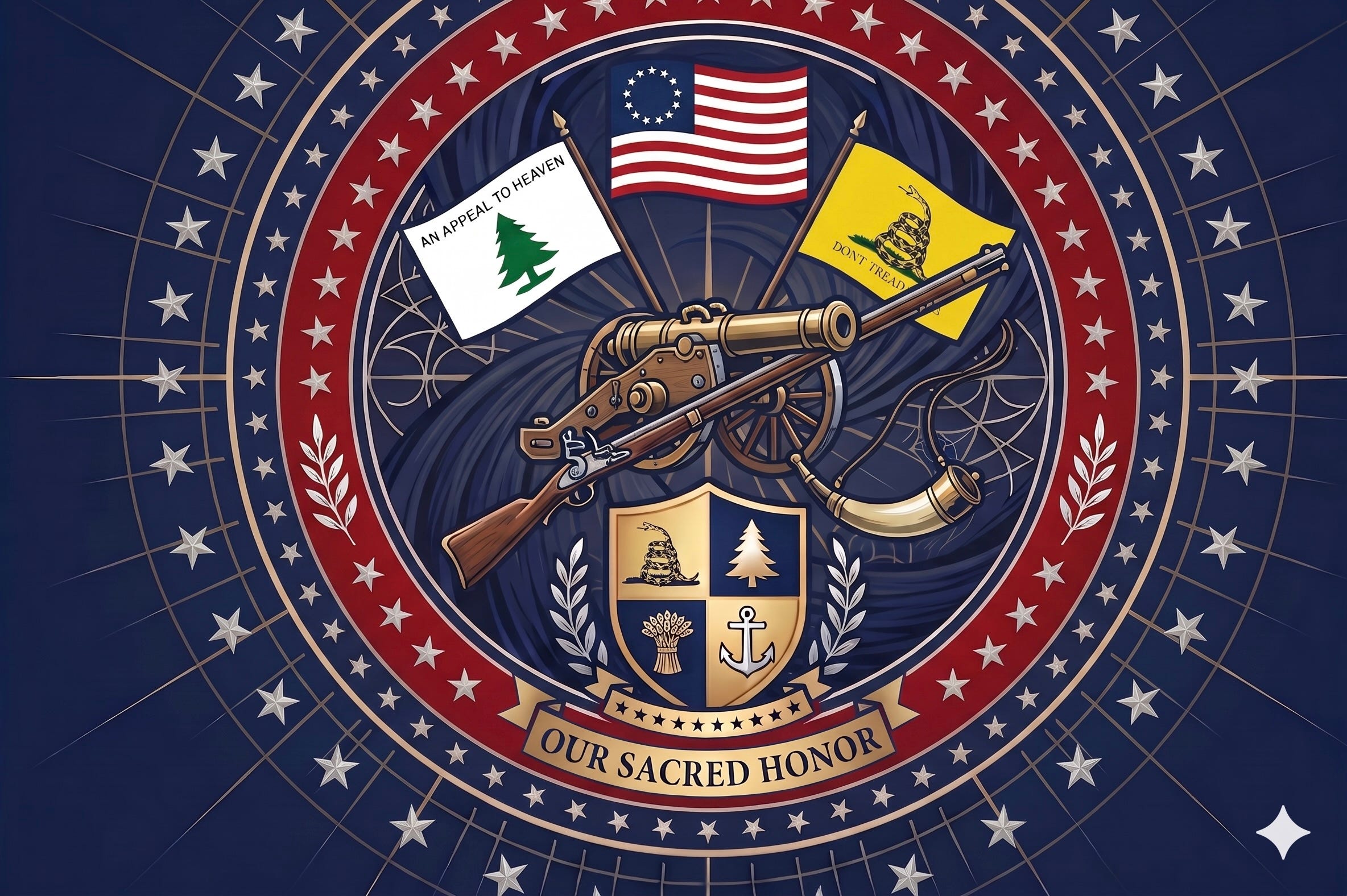
It’s an important week for Americans, and I confess that I’ve been looking forward to it for some time. It’s a little bit difficult, in fact, to decide the most fitting way to honor our nation’s 250th birthday. There will of course be parades, firework shows, flashy displays. I’m for all that! We will read the Declaration aloud in our home. (You should do that too. It doesn’t take very long.) But what else to read, to say, to pray for at such a moment? We find ourselves puzzling over the question of what is fitting, and that brings us back to the nation itself, and the significance of its founding.
Here at Christendom Reborn it is especially fitting to reflect on America’s religious history, and the significance of the first modern country to intentionally built a non-sectarian government even though it was intensely Christian. Yes, there were some Enlightenment ideals in the water at the time, but in the lived experience of the colonists, this was more of an accent note. The United States wasn’t just nominally or “culturally” Christian. It was in a very real sense a nation of religious fanatics!
There are admittedly some funny twists to this story because Thomas Jefferson, author of one of two truly defining documents from our early history (the other being the Constitution, of course) was one of the least religious of the Founders; he was pretty enthusiastic about Enlightenment ideals, and had a lot of heterodox ideas and mixed feelings about God. But colonial America in general was founded first and foremost by people who came here precisely so that they could worship freely, in the way that they believed God wanted them to do. That’s a defining aspect of American history. But despite (or perhaps because of?) that history, they chose the path of disestablishment instead of creating a national church. Why? What does it mean? How has that shaped the course of our nation, and what should we make of it today?
Tomorrow I’ll think a little more about faith and American exceptionalism, musing on what seem to me like the most interesting questions in this space. I’ll try not to be too hubristic about pretending to solve them all. Thursday I’ll think about this specifically from a Catholic perspective, which I hope will be of interest to my Protestant friends too. I’ve thought a great deal over the years about what it means to be a patriotic American Catholic. Catholics have been part of this country from the beginning, but if, like me, one is proud of what Americans achieved on this soil (especially in the founding era) it’s only fair to acknowledge that this was overwhelmingly a Protestant achievement. So how should Catholics feel about that? What have we contributed, and what should we be looking to contribute now?
On Saturday, the actual birthday of this country…. well, I’m still thinking about Saturday. I’ll try to come up with something fitting. Stay tuned.