


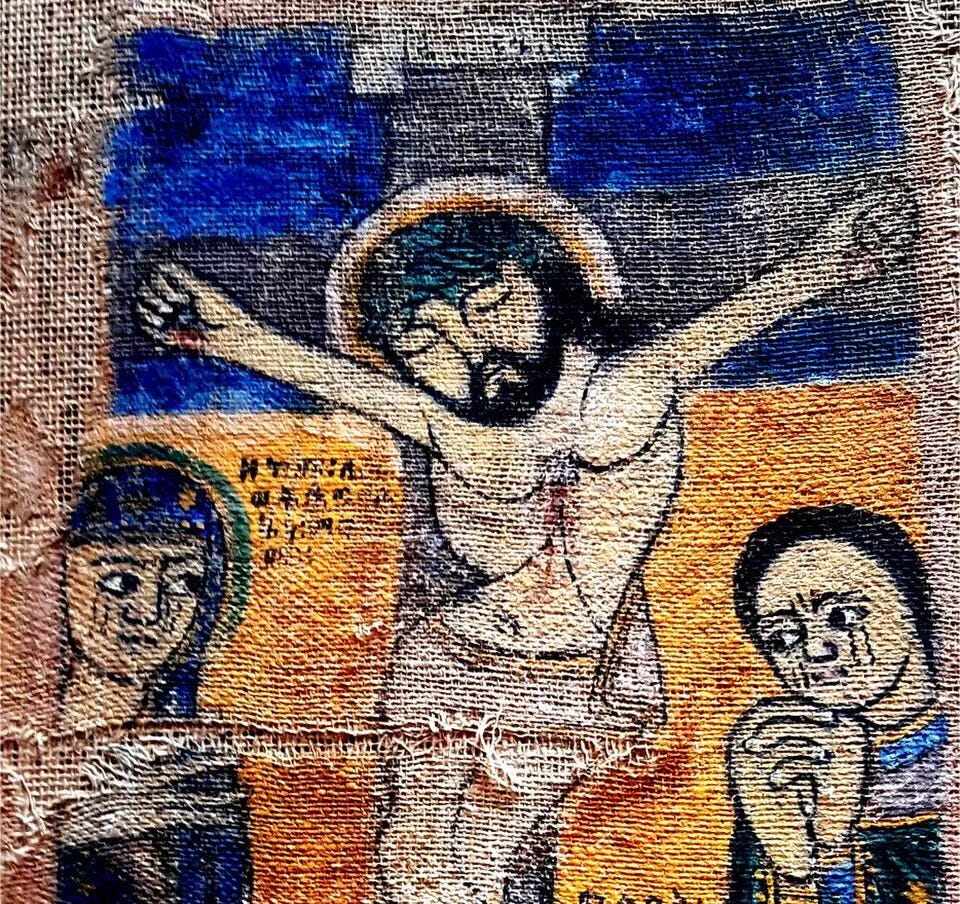
The Next Christendom: The Coming of Global Christianity is a fairly old book by now, but it made real waves when it was first published in 2002. Jenkins, a historian and religious studies professor (and sometime criminologist!) argued that Christianity was undergoing a massive demographic shift, such that it would in the middle-term future be viewed primarily as a phenomenon of the Global South. African Christianity, in particular, was experiencing massive growth when the book came out, which has not slowed in the interim. There are a lot of African Christians now! In 1900 there were probably around 10 million; it’s probably over 700 million today. Africa is now the continent with the most Christians; Sub-Saharan Africa alone is home to nearly a third of the globe’s Christian population. That’s a huge deal. It’s easy to understand why Jenkins concluded that Christianity was dying in the West and coming to life in the South, passing the Christian torch to the Africans.
Obviously some parts of the book are dated now, but I still find it exciting and thought-provoking. It’s wonderful to reflecting on what God might be doing in the Global South, and when I thumb Jenkins’ book, I find myself wanting to drop all my other projects for a month or twelve just to read and explore this phenomenon more. In the big picture, it seems that once colonialism collapsed, Christianity started sweeping the continent, a bit like Europe in the Dark Ages. Incredible! Politically and economically, Africa is the least-thriving continent on Earth right now, but as we know here at Christendom Reborn, Christian faith can be transformative in all sorts of ways. Maybe we will over time see an energized “new Christendom” emerging from a different corner of the world. A hopeful thought indeed.
Jenkins has a lot to say about ways in which the Global South’s expression of Christianity differs from the European kind. Most of it’s just very interesting, and hardly any of what he said gave me pause, in a “do I really want these to be my co-religionists?” sort of way. I will say that as a cradle-Catholic-turned-Anglican, Jenkins doesn’t show a very nuanced appreciation of the complexity of maintaining orthodoxy and orthopraxy within a global Church; though he acknowledges in principle that the questions can be hard, he seems to default overwhelmingly to allowing local populations to adapt Christianity as they will. That’s not always the right choice, nor is it right to see every “crackdown” on non-approved teachings or practices as an example of cross-cultural misunderstanding or intolerance. I do think the Church sometimes needs to crack down on heretics, but right now I would say: Start with the Germans! I’m not that worried about the Africans. Of course, I also recognize that if a “new Christendom” did start to emerge, it would inevitably mean some new and thorny theological, liturgical, or geopolitical controversies. Fine! Bring it on. All things considered, those are good problems to have. (And yet… let’s not plunge back into the Hundred Years’ War. Hold that thought.)
It’s an interesting thing. Writing almost a quarter-century ago, Jenkins predicted that Christian faith would come over time to be seen as a South American and African phenomenon, in much the way it once appeared to be primarily European. (“Europe is the faith, and the faith is Europe.”) Meanwhile, white and Western Christians would become eccentric oddities (like Swedish Buddhists, perhaps). He doesn’t exactly give a timeline, though he throws out the number “50 years” in a few places as a benchmark. And I do remember people talking about this in the 2000s, as though our discovery of the Global South meant that Everything Was About to Change. But here we are, almost to the halfway to the 50-year mark, and though I’m aware that African Christianity is still growing (and happy about it!), I must acknowledge that this has almost no discernible impact on my own religious life. Jenkins did a good thing by putting African Christianity on our radar, but his global prognosis is more questionable, for a very simple reason. Christian faith isn’t dying in the West.
I’m not suggesting African Christianity has no impact here. I’ve encountered the occasional African priest in the United States; I know they’ve been helping making up for our own deficit in priestly vocations. That’s much appreciated! And the subject of African Christianity does pop up occasionally when there’s a conclave or other major “faith event.” Those exchanges tend to be quite amusing, as the conservatives champion the (morally traditionalist) Global Southerners, while progressives hem and haw about whether people from Africa are quite ready for global leadership. But we all have a chuckle and then the news cycle turns, and I likely have no reason to think about African Christianity for a few more years. I fully believe that it’s transforming lives, communities, a whole continent! But not mine. At least not yet.
Faith isn’t a zero-sum game, of course. There’s not a thing wrong with it spreading across Africa even as the West rediscovers its Christian roots. I’m very much in favor of that! What does it mean for global Christianity, though? That might be rather complicated, for reasons that The Next Christendom doesn’t fully appreciate.
As amazing as it is to watch Christianity take root in a new place, we should realistically recognize that this continent, as it modernizes, will surely face some challenges relevantly similar to the ones we’ve struggled with here in the West. It would be nice to help them learn from our mistakes, and yet we ourselves are still struggling to do that, as evidenced by the fact that over-excited traditionalists sometimes seem to look on Africa as a land of unbroken innocence that can Just Say No to liberalism, relativism, indifferentism, feminism, expressive individualism, materialism, free market capitalism, and any other benighted “isms” of the godless West, and live the Christian faith as it was meant to be. I’m… pretty sure it’s more complicated than that.
Africa is going to follow the West’s political and economic path in ways that also redefine their way of life. They want to. And there are many excellent reasons they should. But there will be challenges that Western Christians, having lived with these “new things” for so much longer, might sometimes understand with more depth. We can learn from each other, of course! But recent history suggests that rapid modernization can be hazardous, and it would indeed be quite nice if Western Christians could use their experience to help Africans avoid catastrophic blunders like the Hundred Years’ War.
In short: conservatives and traditionalists sometimes daydream about a resurgent Africa swamping the global Christian community and giving us a kind of “do-over,” a chance to chuck our least-favorite elements of modernity and run the experiment again. But even though we should keep watching the Global South with sympathy and interest, we also need to keep working our own problems. For our own children’s sake, but also for the sake of other Christians across the globe. Europe may not really be “the faith” but it did instantiate the faith in ways that were especially transformative for the entire planet. As the more direct cultural inheritors of that legacy, this may still be our torch to carry here in the West. At least for awhile longer.
Here at Christendom Reborn I will be thinking more about Christianity in the West, most obviously because it’s what I know. But I wanted to discuss Jenkins’ book right now, to make clear that I am thinking about Christianity as a global phenomenon, despite my relative ignorance of its non-Western forms. I am excited by the possibilities of a Christian Global South, but I also feel that our responsibilities as Western Christians are if anything intensified by that phenomenon. Looking at the last century (for instance, the devastating impact of communism) it’s pretty clear that bad Western ideas can do a great deal of harm when they hit less-developed nations whose cultural “antibodies" aren’t developed enough to resist. Might a shared faith be a promising conduit for helping our coreligionists avoid those kinds of tragedies?
I’ve spoken in fairly vague terms in this post about “hard challenges” that we’re grappling with here in the West. Next week I’ll put more flesh on those bones! It’ll be Modern Maladies and Heresies week at Christendom Reborn. I can’t wait.
This post reminds me of some thoughts that I used to have about CS Lewis vs. modern Christians in America.
CS Lewis was fighting for Christianity in a Britain that was moving away from it. It was a slow losing battle there. But in America, Christianity was still strong, and had decades of cultural hegemony to come. And CS Lewis gained the most popularity and influence in America.
I wonder whether African Christians look to the West, follow our debates, and borrow our talking points. Or will. Will Western apologists keep slowly losing here, but gain a legacy of persuasion in Africa?
One irony here is that Western Christians despairing about the culture war could have vast numbers of allies if only they let them in! Africa has lots of Christian social conservatives who would pour into the West if they were allowed.