


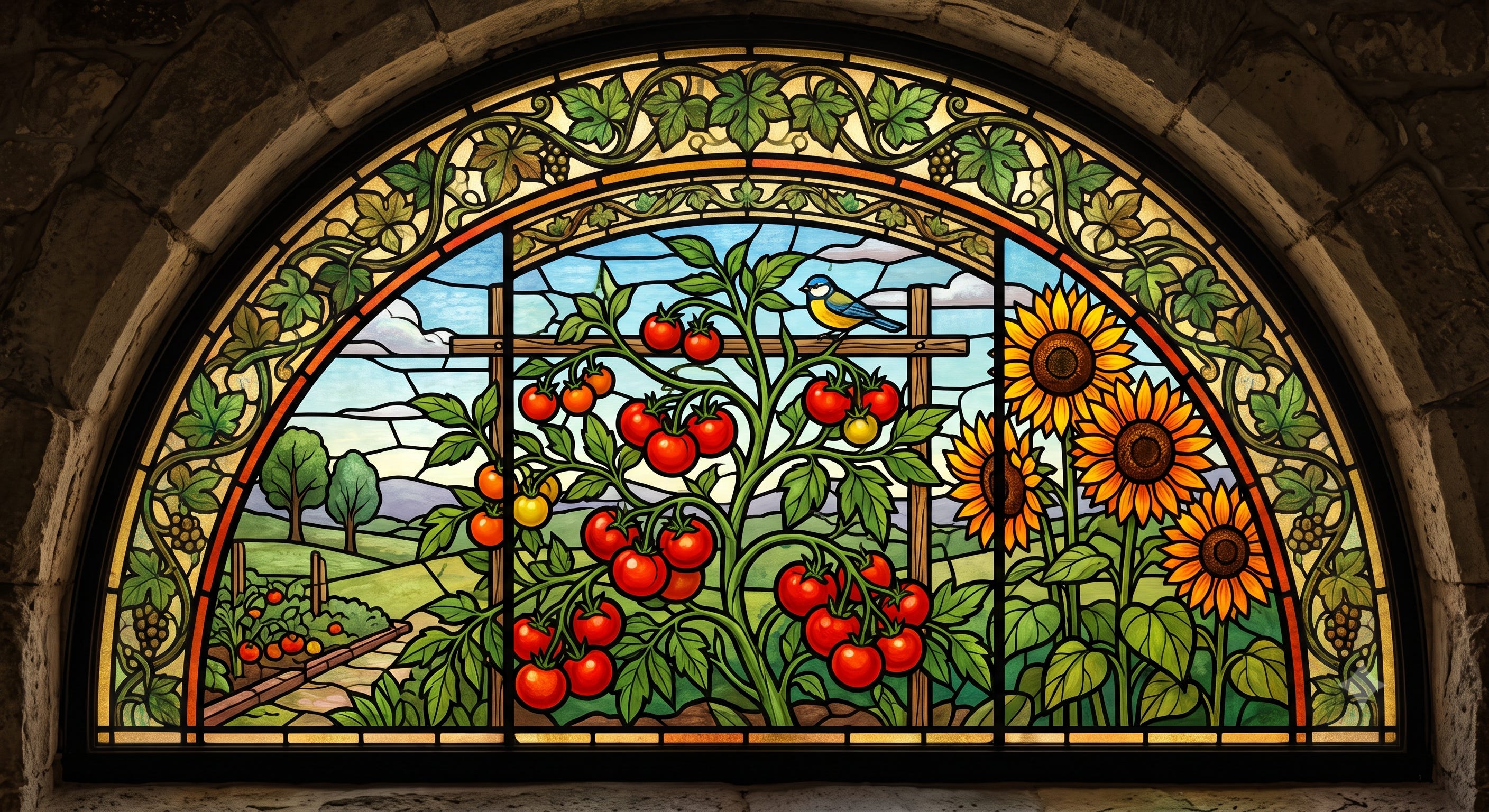
The words of today’s readings are truly musical, at least for a gardener. Isaiah gets right down into the dirt:
For as the rain and the snow come down from heaven,
and do not return there until they have watered the earth,
making it bring forth and sprout,
giving seed to the sower and bread to the eater,
so shall my word be that goes out from my mouth;
it shall not return to me empty,
but it shall accomplish that which I purpose,
and succeed in the thing for which I sent it.Isaiah 55:10-11
I’ve dabbled in various hobbies over the years, but gardening is probably the one that’s been most perennial and enduring. A summer without a garden would just be sad. Even when you’ve already seen it time and again, it’s still awe-inspiring to watch a tomato or squash plant move through its life cycle. To see that tiny shoot unfold into a thriving, productive plant. There really is a feeling that God’s fiat is being confirmed, joyfully, in each individual plant, another embodied example of the fruitfulness of his word. Not many things are as calming and serene as working in my garden, which in summer I do almost daily for at least a few minutes. There’s always a little something I can accomplish even in three or four spare minutes in the garden, and it always leaves me feeling refreshed, and more cheerful.
Eventually we get to the harvest, which absolutely feels to me like the visible manifestation of God’s love. There’s a bit of a sense of achievement, but really, it’s quite obvious to a gardener that she is merely a steward of a process that was ordained by someone else. Thus, when the harvest feels like a real gift. “Here, Rachel! I made you this beautiful tomato, enjoy.” The plant (along with the rain, soil etc.) has accomplished its purpose, the thing for which God sent it.
Moving on to the Gospel, we now get the parable of the sower, which I must acknowledge to be one of those passages that makes me feel a little bit good on those days when it seems like age and responsibility have mostly served to make me more scarred, less joyful and spontaneous, and less overall fit for the Kingdom of Heaven. It was easier to respond to Jesus “like a little child” when I was, in fact, a little child. But look! Here we get more of an ode to maturity. Don’t think of yourself as a worn-out sneaker or decrepit old chair; think of yourself as the mature tomato plant covered in beautiful fruits! Maybe you’re not wearing out, but rather ripening.
I think it’s probably fine to draw some encouragement from that thought, but of course one shouldn’t just sit around preening. (Especially in middle age when, in all probability, we’ve got miles to go before we sleep.) Our priest at Mass today suggested that, instead of thinking of the different seeds in the parable as categorically different kinds of people, we might imagine that all of us have different patches of soil in our own hearts, some stonier or with shallower soil, others weedier, others more fertile. That seems helpful to me. It still allows you to feel good (with humble gratitude, ideally) about the good fruits that the Christian life has already yielded. In my case: my marriage, my children, other warm human relationships, my writing career, and a lot of smaller but still beautiful things like my actual, physical garden. At the same time, you should also consider where resistance to grace might be stunting your growth, making you less fruitful than you could be. Where anxiety (the shallow soil) or worldly attachments or goals (the weeds that choke the healthy plant) might be impeding your moral growth. Where absorbing God’s word more fully might help you to bring a better harvest.
It’s good to think about those things. But also good I think, on a summer day in the garden, to look at the thriving plants and think, with hope, “For to those who have, more will be given, and they will have an abundance.” Thank you, Lord. You have surely always been generous to me.