


When traditionalism loses its commitment to freedom, it tends to tack towards fascism. That’s the thesis on the table for today. You might call it a bit of an experimental thesis, because I’m still deciding how true it is.
Fascism is extremely famous (or infamous), and yet it’s oddly underexplored as a political phenomenon. The obvious reason is that it’s strongly associated with Nazism, which is almost universally agreed to be evil, and that factor tends to swamp all others, making measured analysis difficult. In a contemporary context fascism is at once grossly over-diagnosed and easily dismissed as an empty taunt.
To me it seems clear that regimes or parties can move into a broadly “fascist” space without plunging straight into genocide. Democracy does have an unfortunate way of giving psychopaths a path to power, but often their worst impulses are (happily!) thwarted by constitutions, courts, or opposing parties. So perhaps we should stress that fascism ≠ Nazism, even while acknowledging that it clearly does stand as a specially harrowing case. But on that point, here’s another odd thing. I’m not sure how much people really know even about Nazism.
We know about death camps, Stalingrad, the Blitzkrieg. Ten thousand films and documentaries have been made about all that. And yet, many people are quite startled when I mention, for instance, how Völkisch thought was strongly rooted in rural romanticism, neo-feudalism, and the yearning to re-root German culture in some sort of authentic tradition. That to them seems like the opposite of the spirit of Nazism, which appears mechanistic, industrial, dehumanizing. And I grant that it’s quite a strange story: How did we get from “German flower children dancing across meadows” to death camps rimmed with barbed wire? It seems perverse. It was! But if you’re not aware that this really happened, you’re not in a good position to think about fascism today.
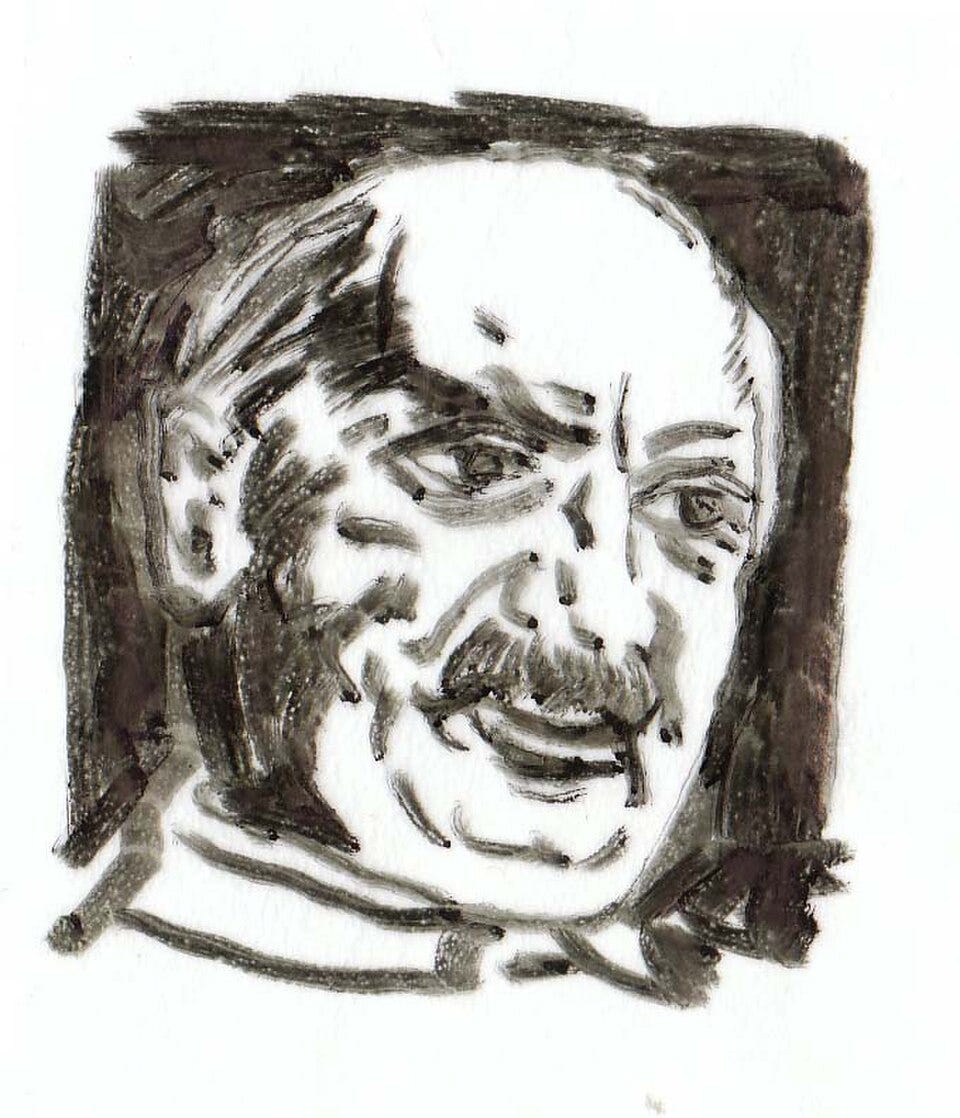
The philosophy world offers another interesting case, in the dismissive reaction one often gets in referring to Martin Heidegger, who was actually a Nazi, as a “fascist thinker.” Heidegger was spectacularly brilliant, and his thought has had a deep impact on postmodernism and deconstruction, hermeneutics, psychology, existentialism, and even architecture. It’s understandable that many would prefer to think of his Nazism as something purely extracurricular that had little to do with his ideas. But this is just wrong.
It’s absolutely true that Heidegger was brilliant; it’s interesting to note as well that among his students, the two who had the deepest impact on political theory (Arendt and Marcuse) were both Jewish and intensely anti-fascist. It seems clear that we can learn things from his work without becoming fascists ourselves. Sometimes it’s necessary to learn from great thinkers who have deeply impacted the world. Heidegger, though, was a great, fascist thinker. That’s not incidental to either his ideas or his legacy. If you think otherwise, go read Alexander Dugin, the Russian political theorist most famous for shaping the paradigms of Vladimir Putin. Dugin has energetically defended the Russian invasion of Ukraine and called repeatedly for the Rus (his re-articulation of the Heideggerian Dasein) to overthrow the West. He’s absolutely saturated in Heidegger. This is not the only application of Heideggerian ideas, but fascist thought is very much a thing.
Fascism is not part of the Christian tradition. The fascist mind characteristically rejects the Christian tradition, chafing against the constraints it imposes in both metaphysics and morals. (Raised in a devoutly Catholic family, Heidegger spent time in a Jesuit seminary before rejecting “the Catholic system” and moving to academic philosophy instead.) Many key fascist thinkers have viewed Christianity as their most formidable philosophical rival or enemy; those who are nominally friendly to it generally want to use the Church as a front for secular power. Both patterns recur. But fascists and religious traditionalists sometimes find themselves marching together, for reasons we can understand.
Fascists are not friends. They don’t want to enthrone Jesus; they want to supplant him. The fascist reformer is every bit as godless as David Hume, but way more interested in co-opting you forcibly into his political schemes.
When traditionalists get fed up with the weakness and formal proceduralism of “the godless conservatives,” they tend to go looking for stronger allies who share their thirst for transcendence. Fascists don’t look weak, and they’re definitely not hamstrung by proceduralism. Where the godless conservatives came pottering to the table with a practical toolkit for governance (contracts, constitutions, checks and balances) fascists bring the fire. They’re alive with prophecy and vision, brimming over with reformist energy. Unfortunately, fascists also have a history of starting wars and committing horrific atrocities.
I can’t exactly blame traditionalists for being arrested at times by fascist thought, which is genuinely fascinating not only for its dark energy but also, at times, for its trenchant insight. A mind unconstrained by decency, commitment, or reverence does occasionally seem to have an awesome, penetrating power; Friedrich Nietzsche literally went mad in his final decade of life, but before that was quite possibly the most searing, revealing critic of alienated, deracinated, insipid modernity that the world has ever known. Even thinkers of lesser stature than Nietzsche or Heidegger may offer lucid insight into particular social and cultural maladies. I recommend Matthew Rose’s A World After Liberalism for a lucid introduction to some of the far right’s most important thinkers: Oswald Spengler with his prescient anticipation of identity politics, Alain de Benoist with his ethno-pluralist critiques of liberal universalism, Sam Francis with his clear articulation of the alienation of America’s white middle class. They all have some truth or other firmly in their sights.
Before they go wandering in the wilds of fascist ideology, though, Christians need to get something very clear. Fascists are not friends. They are not looking to build up the Kingdom of Christ, even if they pretend to be. Many fascists (Charles Maurras, Carl Schmitt) have found the Church’s traditional, mystical, hierarchical, and symbolism-drenched exterior extremely appealing and may want to use it for their own purposes. But their purposes are not truly transcendent, and certainly not faithful to the Christian tradition. Fascists want to “immanentize the eschaton” (to use Eric Voegelin’s term), bringing heaven down to earth so they can possess and control it here.
In despairing moments, fascists look like fellow travelers because their bruising critiques of liberal modernity ring true. And in fact, they frequently do contain some truth. But where the godless conservatives are deficient, lacking resources to speak to many of the deeper or more transcendent aspects of reality, fascists are deceptive, making promises they can’t or don’t intend to keep. They promise to make men virtuous. To unite scattered people, directing them towards a high and noble purpose. To recover strength, manliness, cohesion, authenticity, national pride, cooperation, social order, and, yes, tradition. Getting all that in exchange for “directionless autonomy” or “empty proceduralism” can seem like a great deal. But remember. Fascists are not friends. They don’t want to enthrone Jesus; they want to supplant him. The fascist reformer is every bit as godless as David Hume, but way more interested in co-opting you forcibly into his political schemes.
Must we choose between Hayek and Heidegger? Why is it necessary to “ally” with one or another of these camps? I’m aware that my set-up here may reek of false dichotomy, and obviously there are many further nuances that are worthy of exploration. I acknowledged at the start that I’m still thinking through all these angles. But part of the point of this recent series of essays has been to illustrate why I do actually think religious traditionalists may find themselves, in the end, with something like a binary choice.
There exists a developed tradition that explores good governance, organic order, material prosperity and so on in a fairly practical and grounded way, albeit sometimes with its own philosophical errors or blinkers. That is, in very broad terms, the liberal tradition. If you’re determined to reject that, you’ll probably end up in company with liberalism’s reactionary critics. Christians have not developed their own unique alternative to liberal governance in a contemporary context. (Possibly because… there isn’t one? Because liberalism really does respond appropriately to certain deep features of the world as presently ordered?) If you find those terms offensively formal and universalist, and want to build a regime around something else (blood, soil, national fervor, civic-religious faith, imperial conquest), you’re moving in the direction of something fascist. History suggests that that doesn’t always end well.
Let’s be fusionists, what do you say?
I’m headed out now to a conference full of not-progressive feminists. (Some of us are conservatives. I’m not sure everyone thinks of themselves as conservatives, so I’ll step carefully.) Next week I may publish some thoughts on that. We’re also headed towards the beatification of Archbishop Fulton Sheen! That will certainly be celebrated here at Christendom Reborn, as a wonderful way to cap this little series on Christianity and politics.