


A new commandment I give unto you, that ye love one another; as I have loved you, that ye also love one another. By this shall all men know that ye are my disciples, if ye have love one to another.
John 13 34-35
God is love, and whoever abides in love abides in God, and God abides in him.
1 John 4:16
Christianity is a religion of love. That’s not gooey sentimentality. It’s theology. Christianity teaches that God himself is love. That the Supreme Creator of the Universe made every single human being as a unique and precious individual. And that he desires an intimate, loving relationship with each one.
This is foundational to Christianity, which is foundational to the West, so it’s not surprising that we sometimes lose sight of how radical this teaching really is. In the ancient world it would have struck many people as nonsensical, not to mention deeply disruptive to the established social order. Clearly many people did think that, as we see in the way that some pagans ridiculed the Christians for their naivete in being willing to care for passing strangers or brand new converts. (Lucian’s Passing of Peregrinus is a particularly famous example of biting satire at the early Christians’ expense.)
Of course, the same features that made Christianity threatening and disruptive, also made it beautiful and attractive, especially to the poor. When Rome was hit by plague, Christians stayed in the city to care for victims, disregarding the risk to themselves. Sociologist Rodney Stark suggests that this humanitarian impulse probably brought them an influx of new converts. Their willingness to welcome slaves, women, and the very poor subjected them to ridicule by Romans who saw them as a ragtag band of misfits; also inspired and uplifted many others, including some wealthy patricians who seemingly had a bad conscience about Roman social practices.
Christians’ willingness to countenance the possibility that anyone might have a “special assignment” (to radical poverty, celibacy, religious life etc.) generated another form of energy, and indeed, many did embrace some very unusual lifestyles in those early centuries. There was a kind of spiritual energy (entrepreneurship?) to those early years that we sometimes yearn to recapture, and yet, it’s not per se surprising that the Romans sometimes regarded Christianity as threatening, a mania that was best eradicated.
It has always been the business of Christians to affirm the preciousness of human life, and the value of loving relationship. To insist that everyone matters. That beautiful and humane vision has made the faith meaningful, and served as a beacon for converts, in every age.
But even in an age that is deeply (albeit often unreflectively) rooted in a Christian paradigm, the teaching that “God is love” remains radical to this day. At the least, it’s very demanding, and still very capable of upending any established order. It’s actually rather interesting to think about the cultural pathologies of our own day as an unexpected consequence of this demanding Christian teaching. Having taken for granted that love is supposed to be central to human life and society, we struggle to get any perspective on the more demanding implications of that view. Truthfully, this really isn’t the sort of thing one is meant to take for granted. It’s a very hard teaching. In every age. We should expect it to be hard.
It’s hard, in the first place, for practical reasons. There are lots of unglamorous things in this world that simply need to be done, and to decide who does them, most societies rely on some sort of established social order. How else would we do it? But those generally involve hierarchies, castes or class structures, imposed obligations. High-flown “everyone is unique and special” rhetoric might be fine for Sunday School, but afterwards someone has to clean up the church. Feed the children. Wash the altar linens. Generally, human societies have allotted tasks like that through fairly unnuanced forms of categorizing and stereotyping. “You’re this kind of person, so it’s your job to do that.” Are we allowed to do that anymore? Infinite uniqueness and specialness potentially opens the door to a lot of social disorder. So many unswept streets and unwashed dishes. How do we get around that problem?
There’s also the issue of perverse incentives and perverse people. Lucian (the anti-Christian satirist mentioned above) wasn’t entirely wrong to see that organic social orders give people reasons to be productive and orderly, which an indiscriminate ethic of care may obliterate. It would be nice to think that people who feel both unconditionally loved and totally confident of support and care, would respond by becoming loving and caring themselves. Unfortunately, this doesn’t seem to be the case, at least not reliably. Christians often repeat that we should “hate the sin and love the sinner,” regarding the world, as St. Augustine said, “Cum dilectione hominum et odio vitiorum” — with love for mankind and hatred of sins. But that’s often easier said than done, especially because sinners themselves often come to identify with their sins. Is there a good way to “love” classes of people who are in fact a social menace? Perhaps on a personal level one still can (e.g. the mother of the thief or murderer can still love him), but can we collectively do it? What would that mean?
We might present the big-picture problem like this. Humans are so immensely complex, so varied in their talents and preferences and experiences of the world, that it’s impossible to create a functional social order without filtering out some of that complexity. Leaving certain potentialities undeveloped. “Assigning” certain people to particular roles for reasons that are banal, practical, and to some extent arbitrary. In principle, perhaps, it is possible to do that without forgetting that everyone has immense potential and infinite worth, far beyond what we immediately see. Maybe, with effort, we can make ourselves glimpse a potential poet laureate within the bricklayer. But in practice, most people find that quite hard. We see the bricklayer as a bricklayer, the poet as a poet, and value them accordingly.
In some ways the modern world really has made it a little easier to break out of that paradigm. The bricklayer almost certainly won’t become a poet laureate, but his son (or daughter?) possibly could, given sufficient talent. That would have been exceedingly unlikely until very recently, the disruptive Christian ethic notwithstanding. Despite the restless energy of those early years, it remains true that for most people across the centuries, sheer practicality has supplied powerful incentives not to stray too far from what we might call “natural, organic life scripts.” Now, Christianity did still leave its stamp on that “organic” script, in ways I’ll discuss in my next essay. But still, most people were farmers who married, raised children, and were ultimately buried very close to where they were born. In a very settled social world like that, it’s surely very hard not to see people through the lens of their assigned social space.
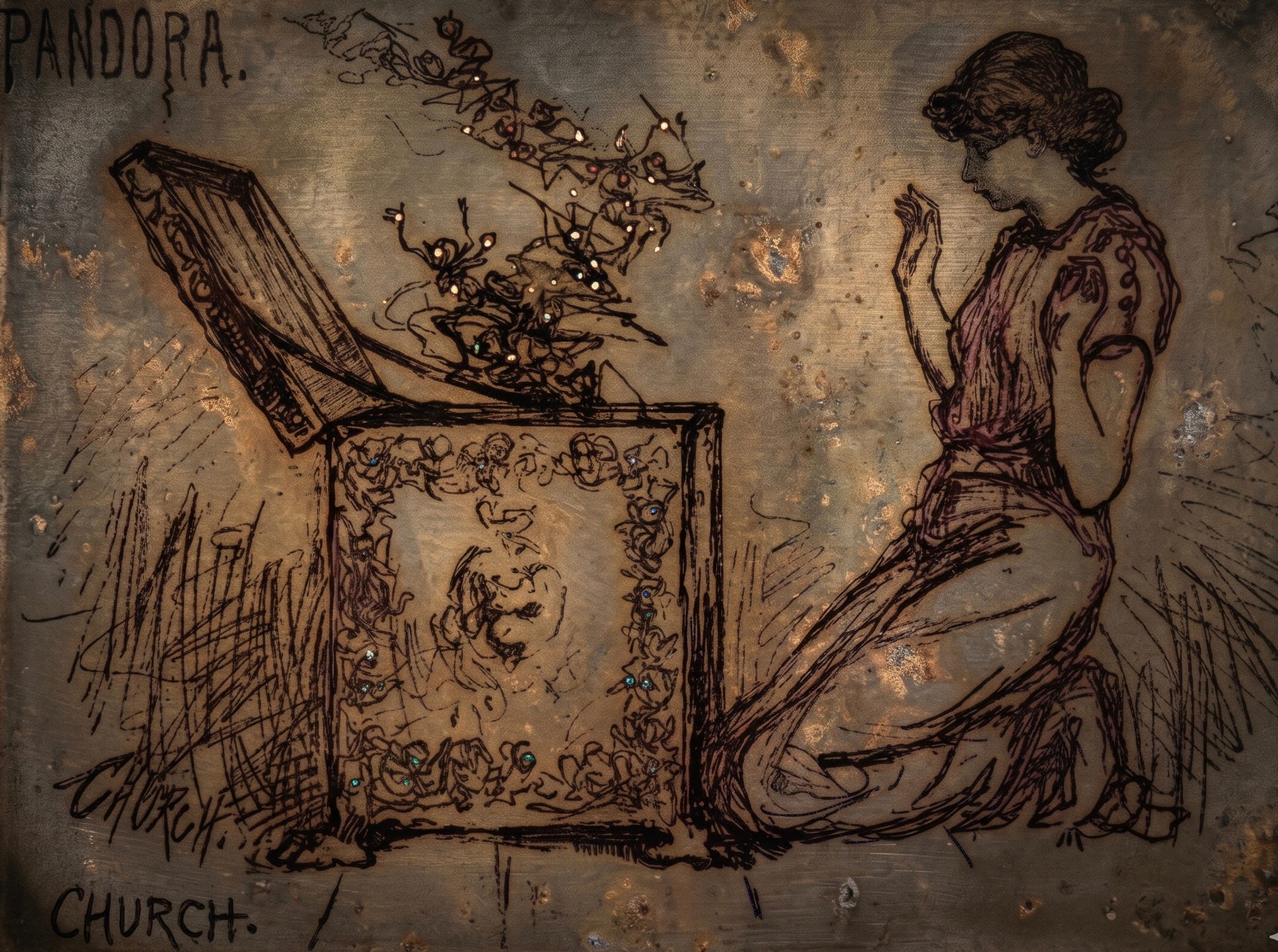
Perhaps it’s good, then, that people today have more opportunity, leisure, and resources, potentially enabling them to realize just a bit more of their natural potential. Might that make it just a bit easier to appreciate the immense variety, uniqueness, and complexity of human souls? I think it does, actually. I suspect that modern people really are, on balance, a little more averse to stereotyping, more sensitive to the variation and complexity of human personalities, more eager to see real talents discovered and developed. But that all comes at a price. Wealth and opportunity, the gifts of the Industrial Revolution and capitalism, have opened a Pandora’s Box of other problems. This can be seen in the number of people who are idle, directionless, lonely and atomized, envious, resentful, or soulless social climbers. In falling birth and marriage rates, and an epidemic of mental illness.
More opportunity means more people crushed by a sense of personal failure. Along with the gift of greater personal freedom, we inherit the burden of needing to carve out a space for ourselves in a bewildering adult world.
Right-wing social critics love to rail against the evils of “individualism” and the modern obsession with equality. Some of those insights are important. Nevertheless, this is the sobering truth. Christianity sowed the seed for all those problems. It wasn’t Karl Marx who taught the world that every individual soul matters, nor Freud who taught us that all persons are unique. That came from Jesus.
It’s not wrong to attribute many of our modern pathologies to perversions of Christian teachings, and yet, it’s probably worth considering that many of the hardest puzzles of our own time would probably have arisen inevitably as humans built societies with more freedom, greater resources, and a complex and varied labor force. Christians have believed for millennia that human souls were immensely precious and unique, and that belief did leave its mark on the world. But for centuries, the unyielding demands of necessity (the basic imperative to keep people fed and warm) shielded human cultures to a great extent from the hard task of grappling fully with the immense complexity and diversity of human persons. Those “protections” have been falling with terrifying speed, and modern societies are scrambling to come to grips with the new reality.
Christian personalists, it’s time to step up.
Interesting! I enjoyed reading this!
So yes, Christians disrupted social expectations by *converting to Christianity* and by monastic vocations. That has nothing to do with Christianity being a warrant for professional addition beyond one's social station. If anything, it's the opposite: virgin martyr or monastic are a step down in worldly terms. Christianity is distinctive in often favoring renunciation rather than ambition, though some Christians may have a vocation to high social rank.
I think calling "stereotypes" (it's a word that should always have scare quotes) "dehumanizing" is a very dangerous exaggeration. No one who buys into a lazy generalization about some group-- women are emotional, say, or Japanese are nerds-- denies their humanity. And while someone might do better by appreciating someone's individually, we have to use generalizations to navigate the world.
Do you have any scriptural basis for this notion that Christian love is somehow incompatible with assigning roles based on categories? Christian societies have done plenty of that, of course: gender roles, aristocracies, hereditary monarchs, etc. There's no particular discontinuity in human history from Greco-Roman paganism to Christendom, as far as I can tell. My knee-jerk reaction is that this is more than half projection of modern fallacies onto Christian theological concepts that don't really imply it.
Nothing about Christian love is in tension with loving the peasant as a peasant and the king as a king.