


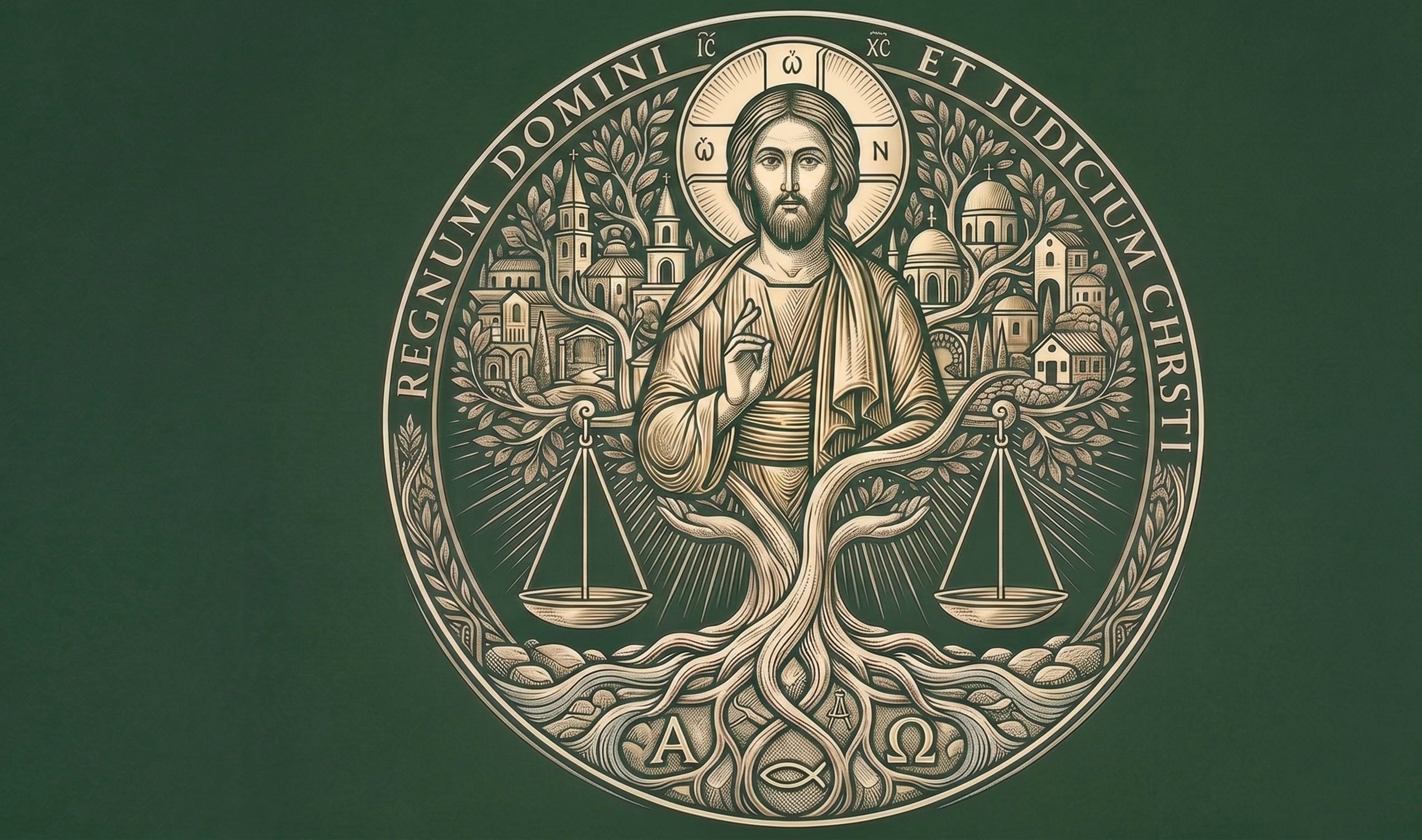
The term “Christendom” carries a lot of baggage. There’s no getting around it. There’s a certain romanticism to it, but it also summons visions of knights and crusaders, crown-and-altar alliances, inquisitors rooting out heretics. I could play innocent and insist that I only want to bring souls to Jesus, but by naming my Substack Christendom Reborn, I clearly imply that my project has political dimensions.
It does. In a sense. But we need to think carefully about the term “Christendom” and what it truly implies.
First, the obvious question: Am I looking to join forces with integralists, the Christian Nationalists, and other neo-militants who have recently called for a more muscular and illiberal form of Christianity? Is Christendom Reborn just my own spin on Andrew Isker’s “Bonface Option”?
It definitely isn’t. As will become clear over time, I have serious reservations about postliberalism, especially the crude efforts to revive time-rejected (as opposed to time-tested) forms of Caeseropapism. You will never catch me trying to restore Habsburgs to power or calling for a new crusade. Buzz off, Protestant Franco.
Now, of course, I could just be choosing a provocative title as a clickbait stunt. So alright fine, you caught me. I did consider “A Staid and Carefully Reasoned Case for Christian Stability,” and decided it sounded too boring. But that’s not really the main thing.
If we dig into the history and etymology of it, Christendom truly means “the realm that Christ judges.” A dom is a statute or legal judgment (think of the Domesday Book), so Christen-dom is really the judgment of Christ, or, to widen the lens slightly, the realm under his jurisdiction. That raises further questions insofar as Christians believe that all realms are, in some very real sense, under Christ’s jurisdiction. Presumably the idea is something like this: those realms that recognize Christ’s jurisdiction are part of “Christendom.” They place themselves under his judgment.
In its earliest usages it seems to have referred primarily to the Mystical Body of Christ, a sacramental order. You entered “Christendom” individually; baptism was the door. Across the Middle Ages the term took on other connotations, getting sucked into complex political-theoretically debates about two kingdoms, two swords, the meeting points of powers and principalities. It’s unsurprising that that happened because there was at that time a geographical part of the world that had a pronounced Christian identity and culture. That was “Christendom.”
So what does this mean today? Aren’t “Christian realms” a thing of the past? Isn’t it nostalgic, imperialist, illiberal, or in some other way problematic to yearn for “a Christian society”?
Possibly. It might depend on what we take that to imply. Medieval Christendom undoubtedly had some features that we can’t (and shouldn’t try to) reproduce. It was geographically bounded and “blessed” (though it often didn’t feel that way) with a neighbor possessed of its own robust political theology. That naturally reinforced Christians’ sense of collective identity. Ideas didn’t spread so easily in those days, so Medieval Christendom was far more homogeneous than any modern society can reasonably be. These are features that can’t, or at any rate shouldn’t, be recovered. Though there have been modern attempts to create that level of ideological/creedal uniformity within a society, they’ve all been extremely ugly. Let’s not go there.
Ugly forms of caesaropapism rise out of the grass, which doesn’t please me at all, and yet here’s the thing. It’s not wrong to feel some desire to build “a Christian realm.” Of course Christians want to live in societies that are friendly, not hostile, to their faith. They are right to see, too, that modern secularism very easily bursts through formal political-theoretical barriers and becomes hostile to them, almost (it sometimes seems) the very second it ceases to be actively friendly. We still have a few old-school liberals promising neutral forms of “tolerance”, but they seem to be a dying breed and their promises haven’t amounted to much. There has to be another option.
Let’s return to “Christendom.” Could “Christian realm” be understood in a way that points to a this-world political reality that neither rejects pluralism nor opens the door to repression? It would have to combine a large number of flourishing Christian communities and institutions with many of the defining components of liberalism. But mightn’t that be possible in a society in which the laws, political structures, and cultural conventions reflect a Christian worldview and Christian influence on some deep level. The structure and rhythm of a society could be non-accidentally harmonious with Christianity in ways that don’t call for secret police or laws against heresy. If that sounds far-fetched, reflect that most of Western Civilization has effectively been “Christian” in this broad sense. (I realize that not everyone will find that reassuring.)
If that is the sort of “Christian realm” we want, there are significant implications for would-be cultural reformers. Rebuilding Christendom may not be a question of asserting control but rather of addressing evident problems using the resources of our own tradition. If we can generate fruitful solutions from within a Christian framework, modern societies will move in a broadly Christian direction without trespassing on anyone’s rights or freedoms.
The “New Christendom” I hope for would certainly allow Christians to live their faith freely and openly, building communities and institutions and exerting their influence on law and culture as free citizens. But Jews, Muslims, Hindus, Buddhists, and others would also be free to do that, and I hope that their contributions would be welcomed, and that they would be valued and respected as fellow citizens. I understand that this will sound Pollyannaish to many people, both traditionalists (who see a certain friend-enemy approach as necessary for survival) and anti-traditionalists (who assume that political manifestations of Christianity will always become repressive). I accept your skepticism, and mostly just ask you to hang in with me for awhile and let me try to convince you.
Partly, I can be relatively cheerful about pluralism because I do have a fairly high respect for other world religions. I’ve known a lot of Jews, Muslims, and Hindus, and my general feeling is, “Yes, I can live with these people.” But it also reflects my evaluation of Christianity. If our faith is a great as I think it is, we should have some confidence in our ability to hold our own in a diverse society.
To skeptics, I would also ask: If happier alternatives to Intractable Metaphysical Conflict might be available, isn’t the possibility worth exploring?
The word “Christendom” also raises some interesting questions about identification and how we think about ourselves. As Christians in the West today, does our membership in the Kingdom of Christ mean something to us, and how does our sense of that relate to our earthly citizenship? If Christian culture and identity become much more robust, will non-Christians be in danger of becoming marginalized or scorned? I’ll return to those questions next week when I discuss Mark Greenglass’ fascinating book Christendom Destroyed.
For tomorrow though, I’ll add a new layer to this dialectic by looking more closely at Christian “despair literature” and explaining how I plan to flip that script.
This strikes me as too timid. Fisking sentence by sentence.
"Could “Christian realm” be understood in a way that points to a this-world political reality that neither rejects pluralism nor opens the door to repression?" Of course. "It would have to combine a large number of flourishing Christian communities and institutions with many of the defining components of liberalism." This hints at, but oddly fails to assert, that liberalism (preferably classical) is the best available politics by Christian standards. "But mightn’t that be possible in a society in which the laws, political structures, and cultural conventions reflect a Christian worldview and Christian influence on some deep level." That's not only possible but has been the prevailing situation in the free West for generations. "The structure and rhythm of a society could be non-accidentally harmonious with Christianity in ways that don’t call for secret police or laws against heresy." Why invoke laws against heresy? No one advocates that. Why mention secret police? Did even the Spanish Inquisition do that? This is like saying "I don't beat my wife but..." Unnecessary exculpation raises needless alarm. "If that sounds far-fetched," No, it doesn't. "reflect that most of Western Civilization has effectively been “Christian” in this broad sense. (I realize that not everyone will find that reassuring.)" Who's the "not everyone" here?
Sorry for the relentless nitpicking. I like where this is going substantively, but something about the framing, the implied choice of audience, seems slightly off. I keep stumbling on claims that leave me wondering who the audience could be to whom they're not obvious, and whether they're worth writing for.