


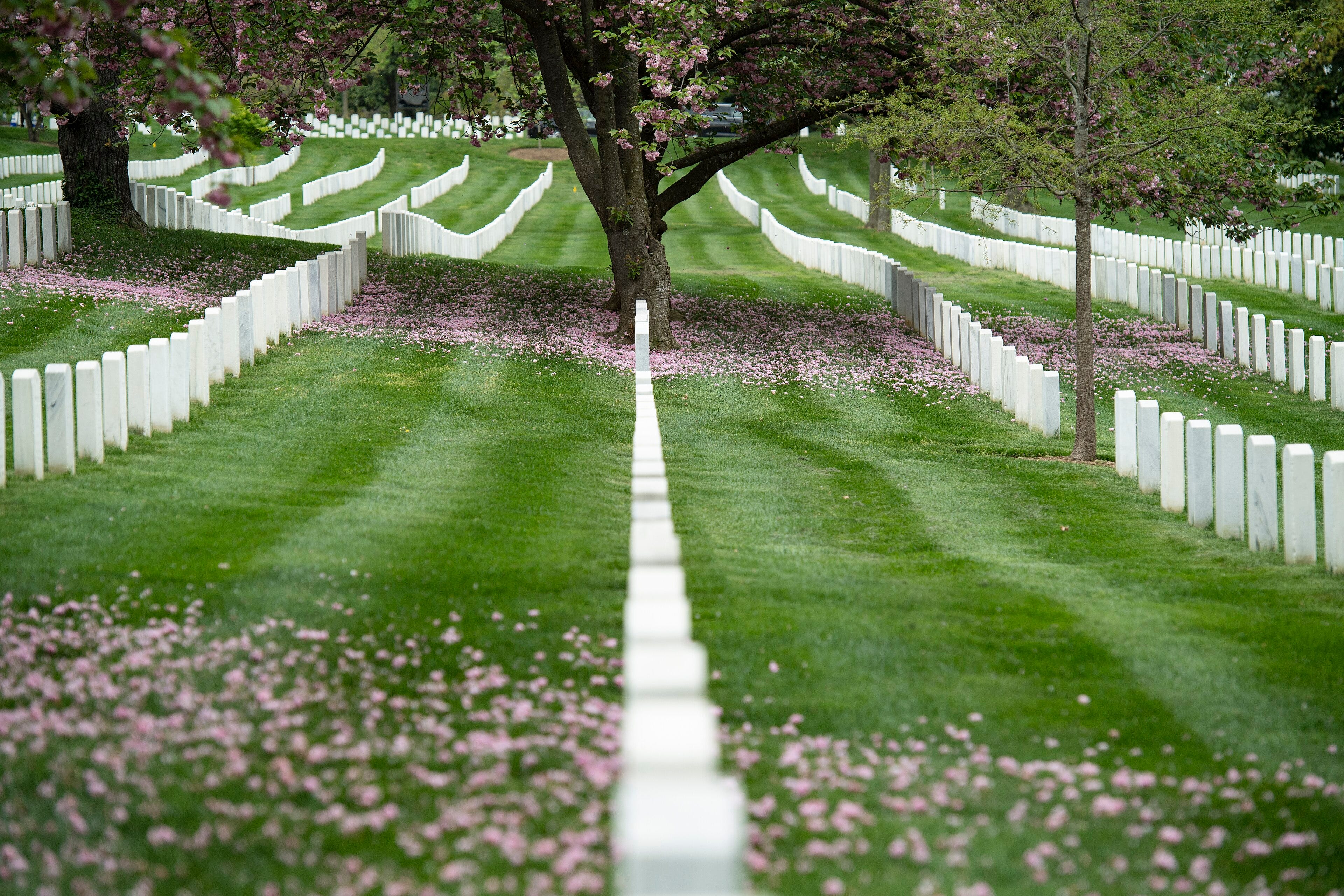
This week at Christendom Reborn will be dedicated to thinking about God and Caesar, and the Christian political tradition. In honor of Memorial Day, however, I am moving the major essays to Tuesday and Thursday, and today recommending this powerful speech from James A. Garfield, delivered in Arlington National Cemetery on Decoration Day (now Memorial Day) in 1868.
Garfield was a fairly extraordinary man, who unfortunately didn’t get to enjoy a very long tenure as president, since he was fatally shot by assassin Charles J. Guiteau on July 2, 1881. Rising from humble origins, he was a respected classicist, a successful university president, and a decorated General for the Union in the Civil War. He was also an ordained minister of the Disciples of Christ, part of the 19th century Restoration Movement. He was an Ohio Congressman when he delivered this speech, and one can hardly doubt that the occasion was emotional, both for him and the nation, with America’s bloodiest war just a few years behind them. A few excerpts:
For love of country they accepted death, and thus resolved all doubts, and made immortal their patriotism and their virtue. For the noblest man that lives, there still remains a conflict. He must still withstand the assaults of time and fortune, must still be assailed with temptations, before which lofty natures have fallen; but with these the conflict ended, the victory was won, when death stamped on them the great seal of heroic character, and closed a record which years can never blot.
After honoring the fallen specifically, Garfield reflects sadly on the nation as a whole, still recovering from a deep trauma, and more specifically in his view from a tragic assault on her defining principles. He clearly still believes that the cause of Union was just, and he meditates a bit on those principles, but then opens out into something even larger by connecting America’s recent conflict to a much longer tradition, in which he clearly sees himself standing:
I love to believe that no heroic sacrifice is ever lost; that the characters of men are molded and inspired by what their fathers have done; that treasured up in American souls are all the unconscious influences of the great deeds of the Anglo-Saxon race, from Agincourt to Bunker Hill. It was such an influence that led a young Greek, two thousand years ago, when musing on the battle of Marathon, to exclaim, “the trophies of Miltiades will not let me sleep!” Could these men be silent in 1861; these, whose ancestors had felt the inspiration of battle on every field where civilization had fought in the last thousand years? Read their answer in this green turf.
Military valor has a way of inspiring high-flown rhetoric, immoderate judgment, and sometimes ideology of an unhealthy sort. We should place it in proper perspective. (For instance, in this case, I wouldn’t make too much of references to “the Anglo-Saxon race,” especially given how quickly he moves on to Marathon, a victory he views in the same light which is clearly not attributable to Anglo-Saxons.) Garfield, though, understood himself as part of something quite large, which incorporated his faith, his American politics, and his military service; those things in his mind were deeply conjoined.
And he was right. They are conjoined. Figuring out where and how is sometimes rather difficult. But if we can’t make some kind of sense of it, we can’t properly honor things that command our respect, as Garfield did, concluding in this speech that:
The voices of these dead will forever fill the land like holy benedictions.
A beautiful sentiment. Amen, Mr. Garfield.