


We’re rounding the bend on Autopsy Week, examining different accounts of Who Killed Christendom. It’s been fun talking about Louise Perry and Carl Trueman. But today, it’s time to face the music. It’s time to talk about liberalism and Patrick Deneen.
If I don’t love talking about Why Liberalism Failed, it’s not because I’m bored by political theory. Or liberalism! There is much more to come on those subjects. The difficulty is just this. Where other authors I’ve discussed so far at Christendom Reborn have been interesting and worthy of engagement, Deneen’s book just isn’t very good. One simply has to discuss it because it is the book that got everyone talking about liberalism and how it destroyed the West. On the level of argument though, this book is just a mess. It takes considerable work to construct the argument to the point where it can be usefully critiqued.
To be clear, I don’t think Deneen is stupid. It’s actually a bit ingenious how he managed to sell this absurd, histrionic theory to such a sizable audience. The book is best thought of, though, as a bit of political-theory pulp fiction. Instead of writing a cogent argument, he just helped himself to some familiar conservative critiques of modernity, and used them like stock characters to craft a Da Vinci Code-style narrative about the decline of the West.
Why is the world so deranged today? Ah ha! Deneen has tracked down the culprit and, in a shocking plot-twist, it turns out that it is us. Liberalism’s downfall was hidden right there in the code of its own DNA. Riveting!
Though I’m being a bit playful, I don’t really mean to mock anyone and everyone who happened to enjoy this book. The broader argument makes no sense, but for some people the book was still interesting because they were not yet familiar with these standard critiques of modernity, and were encountering them for the first time. That’s great. It would be nice to give Deneen credit for serving as an effective popularizer, the Henry Hazlitt or Mortimer J. Adler of conservative political theory. Unfortunately, those benefits were rather badly outweighed by the drawbacks. I’ll get back to that.
Because the book isn’t great, I’m going to deviate from my usual template, and offer my own hypothetical account of liberalism’s putative role as Bane of Christendom. I’ll bring Deneen in later as a kind of hostile witness, an example of how not to approach this subject. Because in fact, liberalism does have real defects. One could even call them “structural” or “congenital.” This isn’t really news to anyone in the conservative movement, and Deneen’s framing is utterly unconstructive, but it is important to reflect on liberalism’s shortcomings, and how we might mitigate them on the path to revitalizing Christendom.
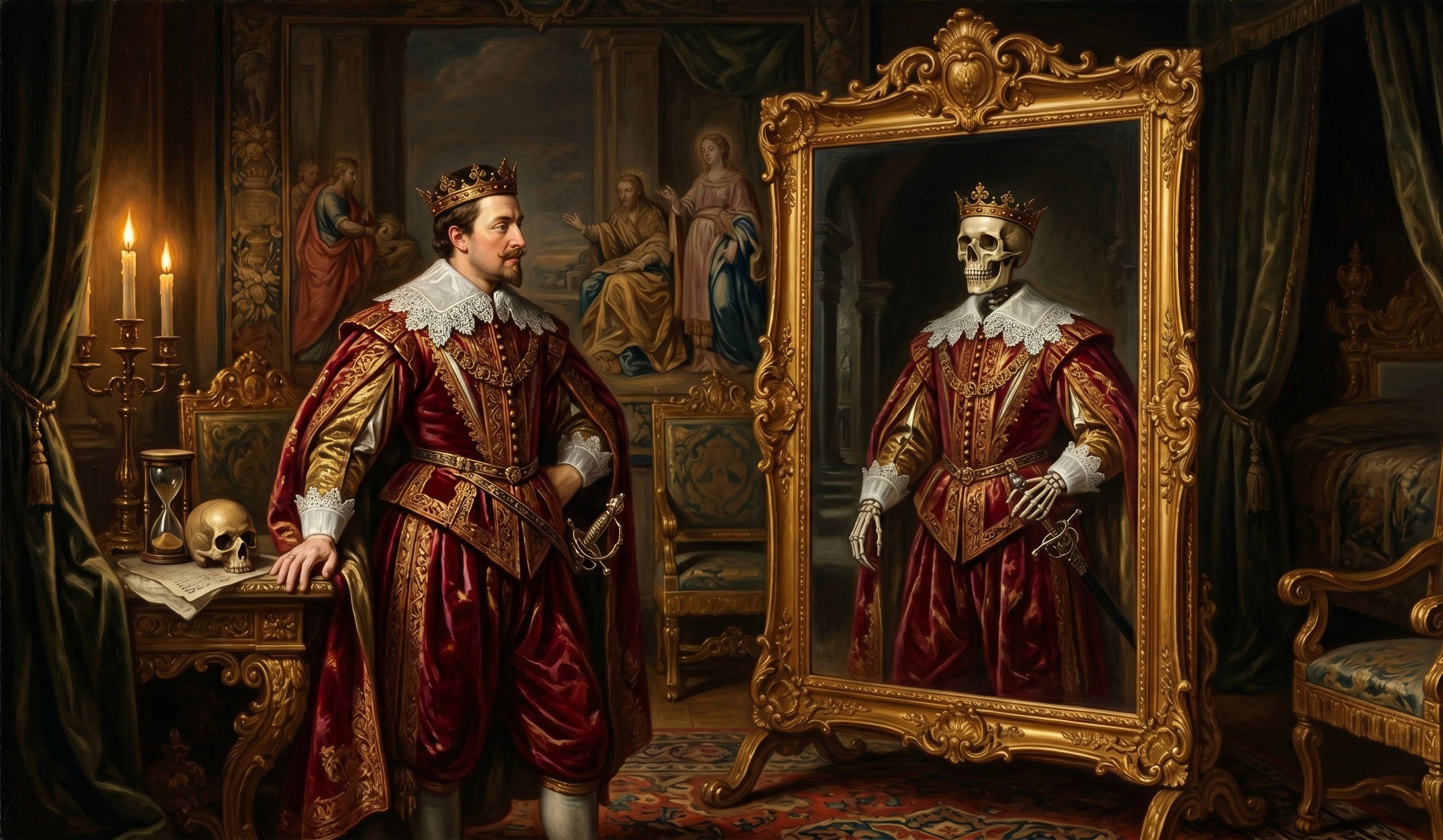
Since it’s Autopsy Week, we might say that this is the most straightforward report of all. Christendom was stabbed to death by a nefarious usurper. The world may have seemed fairly Christian for several more centuries, but it’s been a dead man walking. And now the ruse has been revealed.
I have had occasion already to mention Westphalia, the 17th century negotiation at which the nations of Europe affirmed the principle of cuius regio, eius religio (whose realm, his religion), articulated somewhat earlier at Augsburg. The main goal was to stop killing each other over God, but to that end, the prince of each realm was permitted to choose the official state religion. The Treaty of Westphalia is sometimes described as “proto-liberal” more than liberal, but it was still the critical turning point for our purposes. The Church was declawed, as it were. Its authority essentially devolved to the state.
Up to that point, European politics was something of an ongoing wrestling match between various powers: kings and emperors, popes and bishops, powerful monastic orders. There was an ongoing and lively debate about Church and state, their proper relationship, and the appropriate jurisdiction of each. But the Wars of Religion left Europe desperate and exhausted. They handed the reins to Caesar, begging him to please, pretty please, be tolerant and decent.
In the immediate aftermath, sometimes called “the Peace of Westphalia,” things seemed fairly good (comparatively speaking, at least). But now, almost half a millennium later, it’s clear that Caesar cannot always be trusted to be tolerant and decent. He likes power. And the Church, even declawed, remains a formidable opponent, brimming with influence and moral authority. Across the globe, Christians have endured terrible persecution at the hands of militant secularists over the past few centuries. For all their failings, it turns out that those greedy and corrupt Medieval clerics may have played a meaningful role in preventing politicians from devolving into totalitarian tyrants.
Totalitarianism isn’t necessarily the rule in the post-Westphalia West, but as liberalism has come into its own, religion has been pushed even further to the political margins even in relatively free societies. Many theorists in the West now demand strict separation of church and state, a public square scrubbed of any hint of religious devotion. Some people now regard it as an imposition to be reminded in almost any public context that they may still have some compatriots who worship God. (Keep it to yourself, please.) Meanwhile, the public square is awash in a million forms of activism and political ideology. It doesn’t take a brilliant social critic to figure out that these have to a considerable extent replaced Christian faith as “the new state religion.”
Perhaps, then, liberalism is rightly seen as the villain who killed Christendom. It assassinated the old emperor and stole his clothes! I could go on now to talk about Locke and Hobbes, their paper-thin view of human nature, the rise of a virulent and crusading individualism, the hatred of God and nature… and this narrative might seem fairly persuasive… until one notices that liberalism also seems to be the only effective bulwark against a totalizing secularism. At least, wherever modern states have avoided devolving into repressive control or banishment of religious communities, liberalism seems to play a key role.
It’s just clear that non-repressive states, in the modern era, have leaned heavily on both the concepts and the institutional furniture of the liberal tradition. That includes things like rights, constitutionalism, the consent of the governed, separation of powers, a commitment to preserving individual freedoms. Some “postliberal” apologists try to define “liberalism” very narrowly, so as to treat all those things as penumbras and attachments of liberalism, with the thing itself still reviled as a bitter enemy, a nefarious distillation of modern man’s most rebellious and prideful inclinations. This isn’t quite as absurd as it might initially sound, because many early modern thinkers did have some very wrongheaded ideas. We’ll return to that point in later posts.
Nevertheless, it’s pretty clear that we don’t want to burn down the liberal tradition. It’s far from perfect, but without it we’ll find ourselves defenseless in the face of repressive tyrants. Although modern political traditions have indeed absorbed some early modern errors, there are also important ways in which the liberal tradition has adapted some of medieval Christendom’s better ideas, shaping them into tools that can be used to restrain the modern state. Which is something we badly need. The modern state has a voracious appetite for power, and advances in technology make the repressive control of massive populations more feasible every day.
Why Liberalism Failed doesn’t explain why liberalism failed. It’s far from clear what Deneen even takes liberalism to be. The book assembles a jumble of complaints about modernity, drops them all at the feet of “liberalism,” and wanders off for a smoke break. But it felt plausible to many people, because Deneen’s book hit the shelves at a moment when conservatives were in a despondent place, keenly feeling the brokenness of the world and wanting some explanation. They were ready to be told that the problem was not in ourselves, but in our stars.
Now, there were actually some pretty good parts of that book in which Deneen picked up notes of The Benedict Option, praising organic order, decrying the over-aggressive state, and encouraging people to devote themselves to their families and communities. That was nice. Then he went on to write a new book, Regime Change, in which he sat back in his armchair and wrote a new class structure for America. Huh.
It’s obvious that liberalism hasn’t solved the problems of church and state. They are very much still with us, and I fully expect that we will be working these problems for some time. We will do some of that right here at Christendom Reborn! For starters though, this much seems clear. Viable solutions will involve a robust and reinvigorated culture of faith. And also significant elements of liberalism. Burning down the liberal tradition is not the answer.
That was a lot of theory. Tomorrow I’ll end on a more poetic note, discussing Paul Kingsnorth and the still-widespread theory that the world has become disenchanted.
Re: "In the immediate aftermath, sometimes called “the Peace of Westphalia,” things seemed fairly good. But now, almost half a millennium later, it’s clear that Caesar cannot always be trusted to be tolerant and decent. He likes power. And the Church, even declawed, remains a formidable opponent, brimming with influence and moral authority. Across the globe, Christians have endured terrible persecution at the hands of militant secularists over the past few centuries. For all their failings, it turns out that those greedy and corrupt Medieval clerics may have played a meaningful role in preventing politicians from devolving into totalitarian tyrants."
So yes, sort of... But I'm not sure I followed what is Deneen versus what is you.
I wouldn't say that the peace of Westphalia was a good arrangement. That was the heyday both of royal absolutism and of the Atlantic slave trade, and that's no accident. Bad things happened because the Church was weakened and it was less able to fight them.
And then the royal absolutisms started crashing down, and the slave trade ended, and that had a lot to do with Christianity at work. You kind of jumped over that.
Liberalism was definitely not born in the Peace of Westphalia. It would be closer to the truth to say that it was a reaction against the Peace of Westphalia. *Cuius regio, eius religio* is, more than any other single thing, what liberalism from Locke on down was born to destroy.