


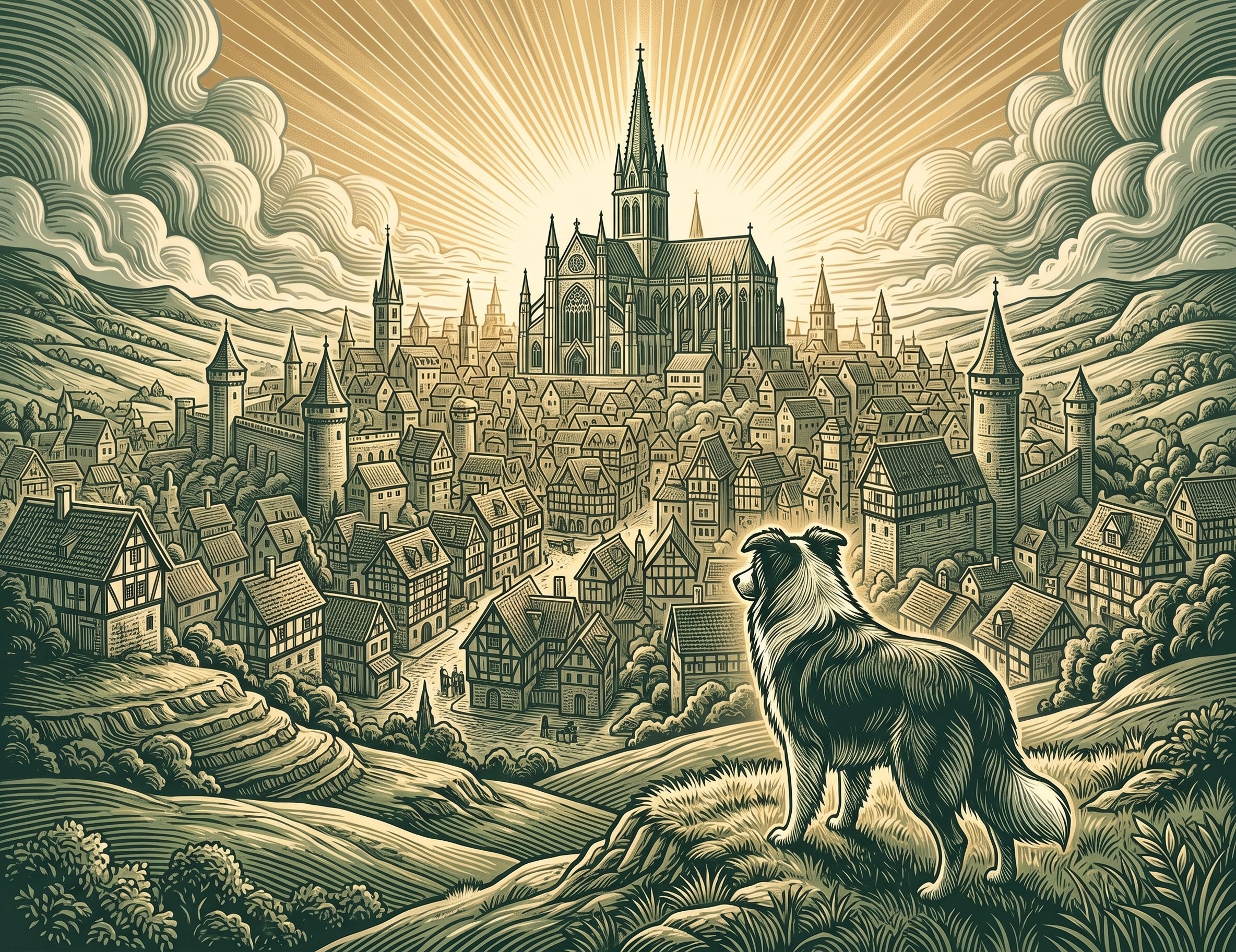
Happy Friday! This Back to School week has been fairly hectic, and I wasn’t fully successful in getting the Substack back on schedule. Maybe next week. I’m still determined to end the week by answering the question: Why do I think of myself as a conservative? What do I take that to mean, and why is it important?
Let me start with a question that has long fascinated me. Why aren’t intensely traditional societies more resilient? Intuitively it seems to me that cultures rooted in rich, long-established traditions should be strong, enduring, steeped in long-accumulated wisdom. They should have a robust, untroubled sense of their identity. A deeply developed root structure that enables them to respond gracefully to changing times. Sadly, it doesn’t seem to be so.
Traditional societies in the modern era have proven astonishingly fragile. Looking back a little further, it’s true that some have shown an impressive capacity to perpetuate themselves across the centuries, as long as they don’t encounter serious opposition. But over the past few centuries, when new technologies or ideologies came sweeping through, agrarian societies in particular were leveled with terrifying speed. The most obvious and painful example can be seen in the rise of communism in the 20th century, which upended traditional, agrarian societies like an ideological plague. One thinks immediately of indigenous populations coming into contact with Western explorers, dying en masse of “virgin soil” epidemics like measles and influenza. Ideas too, it seems, can have malevolent impacts on “virgin minds.”
The contrast with more gradually developing Western countries is fascinating. Great Britain was early to embrace constitutional monarchy, and the world’s first real industrial power. It has traditions, certainly, but tradition has been embattled there quite literally for centuries, sometimes in some fairly harrowing ways. Nevertheless, or perhaps for that reason, it was far more successful at shaking off the 20th century’s toxic political religions. Indeed, the entire Anglosphere was impressively resistant. China and Russia, by contrast, had massive agrarian populations that were still, at the dawn of that century, recognizably perpetuating the same way of life they’d inherited from twenty generations or more—working the same soil, telling the same stories, praying the same prayers. Their encounter with modernity was… a little rocky. To put it mildly.
Some people argue, when I raise this point, that Tsarist Russia wasn’t really “less traditional” than Chesterton’s Britain, just more monolithic and authoritarian. The problem isn’t tradition as such, but a dogmatic, unthinking brittleness that refuses to adapt to circumstance. That critique moves into the vicinity of something true, but stated that way, I don’t buy it. Yes, I’ve read Dostoevsky; I’m aware that a small contingent of elite Russians encountered modernity at earlier dates. I know that revanchism is a real phenomenon, and I’ll have more to say about it in coming weeks. And the relationship between tradition and political forms is likewise quite complicated; certainly Russia has always had a strong element of authoritarianism in its politics.
However, I don’t really think turn-of-the-century Russian peasants were revanchists. They were just farmers. They were what today’s back-to-the-land agrarians want to be and cannot: people who farm, pray, marry, dance, and submit to properly constituted authorities in roughly the way their forebears did, without a lot of navel-gazing because that’s just what one does. True traditionalists. As “based” as human beings can realistically be. It would be absurd to fault them.
But then the Revolution came, and they were absolutely steamrolled. That’s what happens to true traditionalists.
Left to their own devices, the most traditional peoples (deeply rooted in custom, harmoniously fusing orthodoxy and orthopraxy) are sitting ducks for malevolent ideologues. They have their own beauty and worth, which is why I’ve noted already that “The West Needs Traditionalists.” But they have very little capacity to defend themselves. This is why we don’t just need traditionalists. We also need conservatives.
Conservatism is, in a very real sense, a modern phenomenon. In a good way, though. It’s a response to modernity’s unfortunate tendency to level and destroy traditional things.
An analogy might help here. If you’ve ever seen the movie American Sniper, or just had a lot of contact with military or policing families, you’re probably familiar with “the sheepdog fable.” It was popularized by Lt. Col. Dave Grossman, a military psychologist, in his 2004 book On Combat, but I think the story goes back considerably further. It’s something like this: There are three types of people in the world: sheep, wolves, and sheepdogs. Sheep (e.g., most of us) are basically nice people who are unfortunately a bit weak, and perhaps also naïve about the reality of evil in the world. Wolves are self-seeking predators who prey on the sheep. Then there’s a third category: the sheepdogs. They have the aggression of wolves and the goodwill of sheep. They have a sacred calling to protect the world from the wolves. Obviously, military and policing families envision themselves as the sheepdogs.
To be clear, I’m perfectly fine with that; it seems to me like a modern re-expression of Plato’s parable of the metals. The sheepdogs are Plato’s “silver-souled,” the guardians, protectors of order and decency. And I am not a member of that class! I respect them, which is important, because honor is the reward they most crave and indeed deserve. But my own temperament and talents are different.
However, I bring up the “sheepdog” parable here because I think of “conservatism” in a somewhat analogous light. Conservatives are guardians too, of a different kind. They are stewards of tradition.
Tradition is absolutely essential to human thriving, a primary conduit to beauty, truth, and goodness. Without tradition, civilization is impossible and life bitterly impoverished. But traditionalists have grave vulnerabilities that modernity has exposed, sometimes in fairly horrifying ways. Traditional subcultures are easily destroyed, and even when they aren’t destroyed, traditionalists are sometimes prone to their own forms of predation and malevolent zealotry.
Conservatives are tasked with counteracting this tendency. They must act as thoughtful stewards of humanity’s inheritance. Their job is to work for its preservation, not in a dogmatic or reactionary way, but thoughtfully and prudently. Conservatives must love the past, but not be dogmatically wedded to it. They must be keenly attentive to changing times, but not too fearful about the future, because fear leads to turtling, and turtles can’t protect anyone but (maybe) themselves. You could summarize my view by calling conservatives “reflective traditionalists,” and that would be broadly true. But that would miss an important aspect of conservatism that I think needs to be appreciated, especially in a fulcrum moment like the present, when things seem to be changing even more quickly than usual.
In its own way, conservatism really is a fighting posture. That feels a bit paradoxical, because it’s also deeply suspicious of ideology, revolution, and most other familiar forms of political struggle, and yet I think it’s just clear, looking across modern history, that conservatism is nearly always embattled. Some ages are more embattled than others, but the posture is reasonably constant. We have a tendency, looking back on older generations of conservatives, to imagine that they were in a very different position, just kind of keeping an eye on a traditional inheritance that was already in pretty good shape. If they were sheepdogs, they were mostly just trotting around the pasture keeping an eye out in case any wolves should happen to wander by. By contrast, we see ourselves desperately trying to save a few sheep from a ravenous pack that is already laying waste to the pasture. Maybe we can’t even be conservatives anymore, because there’s so little left to conserve.
That view is steeped in nostalgia. And it’s mostly wrong. When you go and read earlier generations of conservatives, you quickly realize how naïve we are to think that we’re in some kind of unique position among moderns, fighting to keep the wheels on in the face of violence, social dissolution, destructive ideologies and the like. That’s basically the normal condition of principled conservatives; they always have their backs to a wall. And should that really surprise us, considering the ever-shifting nature of modernity? Is it not clear just on face that this “sheepdog” will, almost necessarily, be a somewhat rare breed in every age?
A principled conservative must continually maintain delicate tensions between freedom and authority, custom and innovation, compassion and moral clarity. He must learn to live with high levels of uncertainty, because the past is complex, the future is unknown, and he is somehow expected to mediate between them. He must maintain a certain aristocratic posture without falling into high-and-lonely narcissism. He must keep sight of the virtues, without despairing of the world’s egregious failure to inculcate or even respect virtue. These are hard asks. “Conservatism” as I understanding it has a certain intellectual component, and yet it shuns hard forms of rationalism and ideology. There will never be all that many conservatives in the world. Very few people even aspire to be conservatives in a robust sense.
Of course many people do identify as conservatives. I’m not planning to go around policing the term, and I do actually think many Americans have elements of a real “conservatism” in their worldview. America is an unusually conservative country. However, most people who identify that way probably have strong elements of “traditionalist” or “revanchist” in them too (or instead) —the noble and ignoble sides of a coin we might call “the past.” Conservatives don’t just like the past. They steward the inheritance of the past.
Conservatives love arguing about the nature of conservatism. I’ll probably say a little more about other definitions over these next few weeks. I have great admiration for Russell Kirk, for instance, and he clearly did much to define and ennoble conservatism. But I think there are some subtle differences between my perspective and his that are worth flagging. On Michael Oakeshott’s view, interestingly, I think I probably don’t qualify as a conservative. (You know, I never liked that guy all that much.) Another piece of this puzzle, mostly left out of this essay, is freedom. I care very much about freedom. I’ll say more about that too in coming essays.
For now, I’ll just leave this on the table. This is how I understand “the mission” as a conservative. It’s got an element of paternalism, but isn’t that true of almost anyone who understand themselves to have particular (and worthwhile) work to do in this life?
Tradition is precious. It has to be someone’s job to protect it.
By the way, since Christendom is the topic of this Substack, I'd be interested in what you think. The relationship is between conservatism and Christianity.
I'd say that Christianity can be incidentally conservative. Of course, insofar as a culture is already Christian, Christians want to keep it that way. That's conservatism of a sort. And there may be all sorts of ways in which a given culture is right and good, and the likeliest alternatives are wrong and bad. If property rights are being challenged, Christians will come to their defense. If marriage is being challenged, Christians will come to its defense.
But in a more profound sense, Christianity is not really conservative. It believes this world is fallen, and that Christ has overcome it. Christians are called to live by an ethics that transcends the customs of every society. It is definitely not relativist. It can be multiculturalist in many ways, but not in the most important things; it wants to convert all nations. It knows very well that no past era was ideal. It trusts not in princes and the sons of men. It knows this world cannot be conserved. It is too vitiated for that, and will only run down unless it is redeemed. It will be redeemed, but its redemption will be radical change and not conservation.
It's interesting to explore the contrast and overlaps between traditionalism, conservatism, relativism, and multiculturalism.
If I defend tradition X, am I defending it because it's traditional, or because it's right? If because it's right, does its traditional state this matter? If because it's traditional, then I would defend Y if it were traditional, and from there, it's a short-step to multiculturalism.
I like to say that Americans are liberals and conservatives, because all we have to conserve is freedom, and the freedom we want is the freedom we have. The political labels liberal and conservative are like the political labels Republican and Democrat. The labels are innocuous because the underlying consensus is robust. The polity is a democratic republic, and we all want it to stay that way. The polity is liberal and conservative, and we wanted to stay that way, too. The labels bear little substantive relation to the coalitions. What do you think?